
July 2025
At Energy Local, we're campaigning for a change to the rules that govern electricity trading - the Balancing and Settlement Code.
The 'P441 modification' would clarify the law on local energy markets and would in effect allow more larger renewable generators to form Energy Local Clubs with local households, where they are currently unable under the rules.
Kate Rimmington has been speaking to two community generators facing this frustrating barrier.
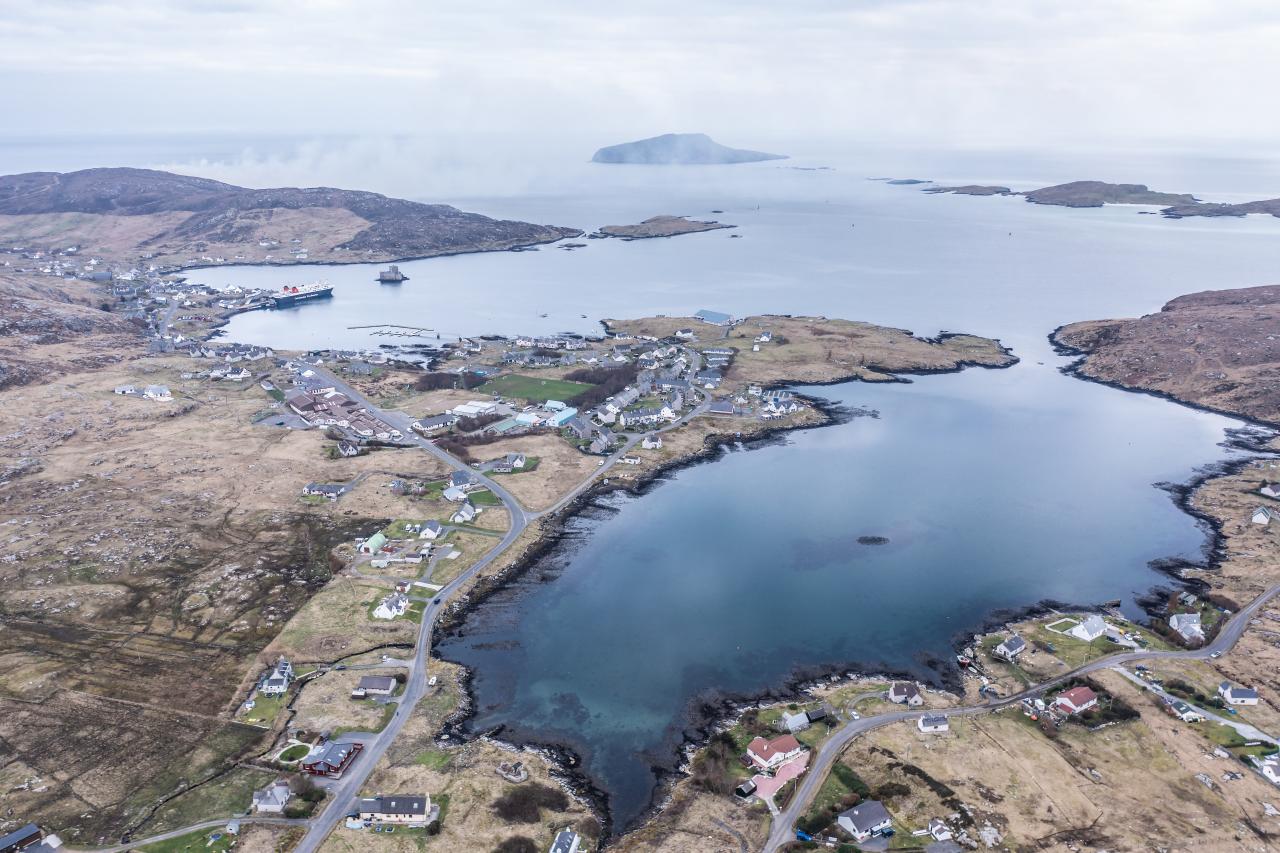
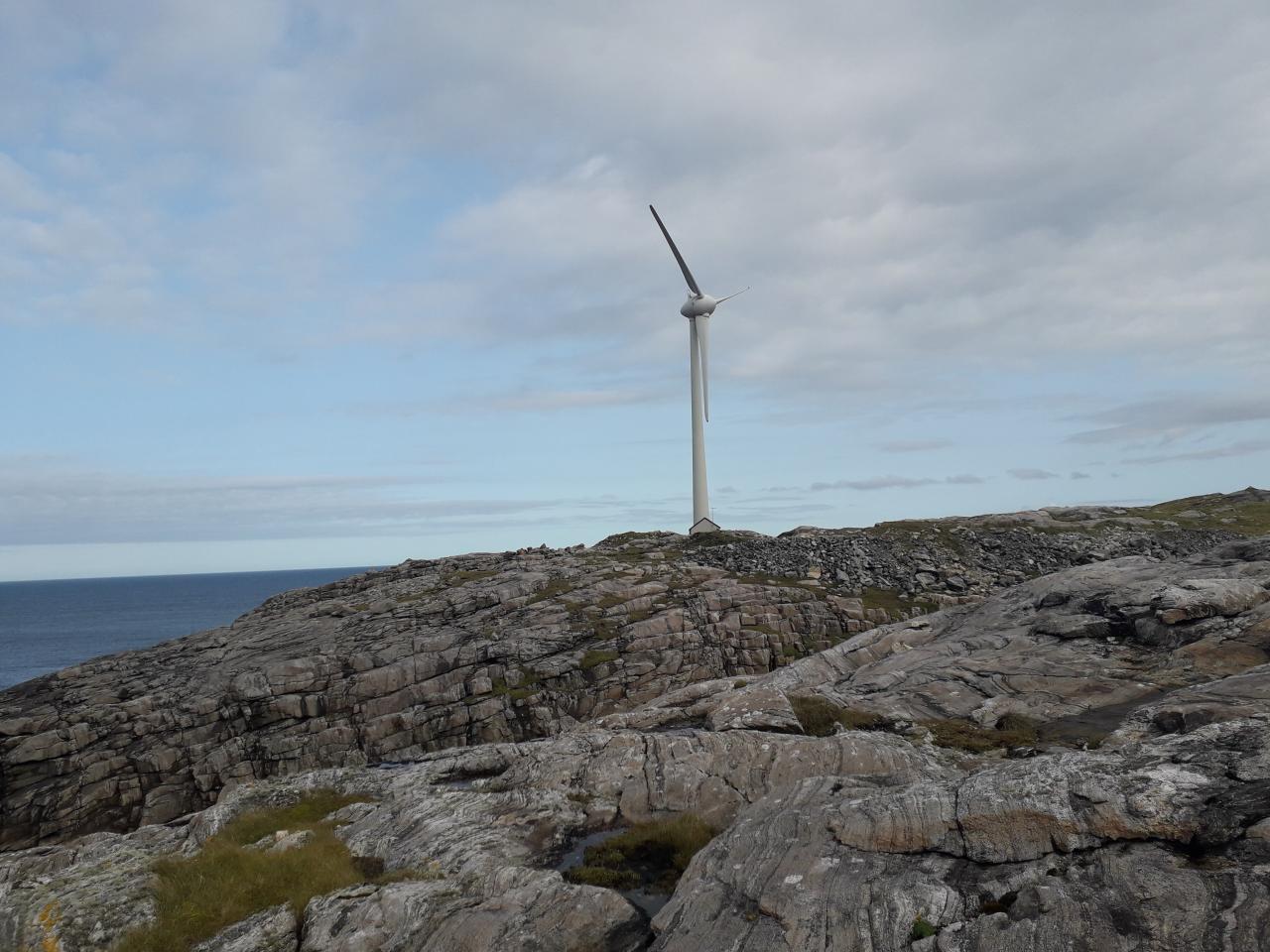
In the Western Isles of Scotland, the Barra and Vatersay Community Ltd Group owns a 910kW wind turbine, located 100m from the Atlantic in a top-rated environment for wind power generation.
Euan Scott, a director of Barra & Vatersay Wind Energy Ltd, a subsidiary of the community company, says the turbine is paid around 9.5p per kilowatt hour for the electricity it exports to the grid. After costs, the net profit is set aside for community projects and planning for the future.
Householders and local businesses meanwhile are paying much more per kWh - the current price cap including VAT is 25.73p.
High cost of island living
Barra and Vatersay is a community of two islands connected by a causeway, and home to around 1300 people.
On these remote Scottish islands, consumers also face higher standing charges and more expensive fuel, food and travel costs than mainland communities. Food and fuel have to be imported from the mainland, a five-hour ferry ride away, and residents who work away or need specialist medical treatment face the same journey or a one-hour flight to Glasgow.
The community relies on subsea electricity connections for power from the wider grid, with back-up diesel generators for occasions when the local grid is isolated from the mainland (this is known as being 'islanded').
The islands are home to a traditional 'crofting' community, where many properties are small agricultural holdings. Homes are typically old and energy-inefficient and there's no gas grid, so residents mainly rely on oil, calor gas cylinders or electricity for heating. Meanwhile, wages are lower than the national average.
It's a case study in why fuel poverty is so acute in the Western Isles of Scotland, despite the potential of renewable wind power.
An added frustration for Barra and Vatersay Community Ltd is that the turbine's generation must be 'constrained' (meaning it must be prevented from generating at full capacity) on occasions when the local grid is 'islanded'. That's down to concern that the local grid might not have the capacity to cope with the level of power generated by both the turbine and the back-up diesel generators.
On paper the Barra and Vatersay community initially looks like a perfect candidate for an Energy Local Club – an arrangement where generators and consumers under the same primary substation club together to match generation and power consumption so they both get a better price. The community company would have more income with which to fund local projects, and residents and businesses would pay less. The grid could also be managed more efficiently by incentivising residents to match demand to local renewable generation.
But there's a barrier in the way.
Barra and Vatersay can't form an Energy Local Club, simply because the turbine is connected at a different voltage to the houses – 11kv as opposed to low voltage (LV).
This is not a real-world barrier – it's just the way the rules work. Under the current regulations, the generator and consumers need to be metered at the same voltage level to be able to form an Energy Local Club.
It's immensely frustrating for householders and businesses in Barra and Vatersay.
Expanding the benefits of Energy Local Clubs
It’s difficult to know how many other communities across the UK are missing out on the option of forming an Energy Local Club because their local renewable generation happens to be connected at 11kv.
However, we know that Barra and Vatersay is not the only one. Several hundred miles south in Llandeilo, Carmarthenshire, another community-owned turbine connected at 11kv cannot form a club with local people.
In their case, community benefit society Ynni Sir Gar has an agreement in place that allows them to export their generation at a reasonably good price to a large organisation. However, Neil Lewis, who is manager at Ynni Sir Gar, a local councillor and non-executive director of Energy Local CIC, would much prefer to do more to help local people and schools in their rural town reduce bills by forming an Energy Local Club.
It’s not an option at the moment, but as soon as the P441 modification passes, more local communities will be able to enjoy the benefits of lower bills thanks to living near to renewable generation.
To support our campaign to pass the P441 modification you can find out more here.